






What to know about access problems for Kingston rubbish removal
Posted on 10/06/2026
If you are planning a clearance and the route to the waste is awkward, cramped, or just a bit of a headache, you are not alone. Access problems for Kingston rubbish removal are one of the most common reasons jobs take longer, cost more, or need a different approach. A narrow hallway, a basement flat with no lift, parked cars outside, or a garden reachable only through the house can all change how a collection is planned.
This guide explains what access issues actually mean in practice, why they matter, and how to prepare so the job runs smoothly. It also covers the small details people often miss, like shared entrances, loading space, steps, and fragile surfaces. In our experience, getting access right saves time, stress, and a fair bit of back-and-forth on the day.
For a wider look at the kind of work that can be arranged around these challenges, you may also find the services overview useful.
Why What to know about access problems for Kingston rubbish removal Matters
Access is not just a logistical detail. It shapes almost everything about how a rubbish removal job is planned. If the team cannot get close to the waste, it usually means more carrying, more time, more handling, and more risk. That can affect both the final price and how long the clearance takes.
Think of a top-floor flat near Kingston town centre with a narrow stairwell and no lift. Or a house in a quiet road where a van cannot stop outside because of traffic, neighbours, or a parked vehicle. The work is still possible, but the process changes. Sometimes a two-person lift is enough. Sometimes a larger team or multiple trips are needed. Occasionally, a different service is the sensible choice entirely.
It also matters because access problems can create avoidable damage. Scraped walls, bent banisters, chipped paving, or a dented gate are the sort of thing nobody wants to deal with after the fact. A careful plan helps protect both the property and the people carrying the waste. Truth be told, this is where a decent amount of the professional value sits.
Another reason it matters is timing. A job that looks simple at first glance can stall if the team arrives and discovers the path is blocked by bins, builders' materials, locked gates, or a car in the way. That delay is annoying for everyone. A quick five-minute check before the booking can prevent a messy afternoon later on.
If your clearance involves heavier or bulkier items, such as furniture, renovation debris, or a house full of mixed waste, access planning becomes even more important. For that kind of job, the practical details discussed in house clearance in Kingston are especially relevant.
How What to know about access problems for Kingston rubbish removal Works
Most rubbish removal services start with a basic assessment: what needs removing, where it is located, and how easy it is to reach. That assessment can happen over the phone, by message, or sometimes from photos. The goal is not to overcomplicate things. It is simply to understand the route from the waste to the vehicle.
Typical access points include front doors, side gates, alleyways, shared hallways, lift access, rear gardens, service yards, driveways, and loading bays. Each one changes the job in a slightly different way. A straight driveway is straightforward. A basement storage room behind three locked doors is a different beast altogether.
The team will usually want to know:
- Whether there is parking directly outside or nearby
- How far items must be carried
- Whether stairs, lifts, or steps are involved
- Whether the waste is indoors, outdoors, upstairs, or in a garden
- Whether access needs to be shared with neighbours or building management
- Whether there are any height, width, or weight restrictions
In practice, the process is often a balance between distance and handling. The further the carry, the longer the job. The tighter the path, the slower the movement. The more awkward the items, the more care needed. Simple enough, really, but easy to underestimate when you are staring at a pile of old furniture or builders' rubble in the wrong corner of the property.
Some jobs can still go ahead with limited access, just with added labour. Others may need to be split into stages. For example, if rubbish is stored in a rear garden with no direct external gate, the team may need to carry it through the house in manageable loads. That is perfectly normal, but it should be discussed in advance so no one is surprised on the day.
For time-sensitive collections near the station or in busy streets, access planning is even more important. A helpful local example is the kind of turnaround described in rubbish clearance near Kingston Station, where timing and kerb access can shape the whole job.
Key Benefits and Practical Advantages
Planning around access issues is not just about avoiding problems. It gives you a cleaner, calmer experience from start to finish.
- More accurate pricing: The clearer the access details, the easier it is to estimate labour and time properly.
- Less disruption: Neighbours, tenants, and building users are less likely to be inconvenienced when the job is mapped out in advance.
- Lower risk of damage: Good planning helps protect doors, floors, lifts, walls, and shared areas.
- Faster completion: With parking, loading, and carrying routes sorted, the team can get on with the work rather than problem-solving on site.
- Better safety: Clear access reduces trip hazards and awkward lifting.
- More flexibility: If access is tight, the removal can often still happen with the right equipment or a revised plan.
There is also a quieter benefit that people sometimes overlook: peace of mind. When you know the rubbish will be removed without the drama of blocked entrances or last-minute rearranging, the whole thing feels easier. And let's face it, nobody wants a collection day to become a tiny logistics crisis.
Access issues can even influence how waste is separated. If an item is delicate, heavy, or awkward to turn in a narrow corridor, it may be safer to dismantle it first. That is where a service offering can be more useful than a simple van-and-driver arrangement. If you are comparing options, a local page like rubbish removal in Kingston gives a sense of the kinds of jobs typically handled.
Who This Is For and When It Makes Sense
This topic matters to a much wider group than people first assume. Access problems affect homeowners, landlords, tenants, tradespeople, shop managers, office administrators, and anyone clearing out a property with a less-than-perfect layout.
You will likely need this guidance if you are dealing with:
- Basement or top-floor flats
- Terraced houses with narrow hallways or rear access only through the property
- Blocked driveways or no on-street parking
- Apartment blocks with shared corridors and lifts
- Commercial units with loading restrictions
- Garden waste behind high fences or through side passages
- Renovation waste in areas with scaffolding or partial obstruction
It also makes sense for people who are moving in or out of a property. During a sale or purchase, access can be tighter than expected because of furniture, boxes, or builders still working on the place. If that sounds familiar, there are some useful related local reads such as house buying tips for Kingston and guide to successful real estate investment in Kingston, both of which sit close to the practical realities of property changeovers.
For business premises, access matters for a different reason: disruption costs money. Office jobs often need quiet, efficient removal with minimal interruption to staff or customers. A page such as office clearance in Kingston is a good example of where access control and timing need to be thought through together.
Step-by-Step Guidance
If you want to avoid the usual access-related snags, here is a practical way to prepare. Nothing fancy. Just the stuff that genuinely helps.
- Walk the route from waste to vehicle. Do this slowly. Count doors, gates, steps, turns, and tight corners. If you would struggle with a sofa at arm's length, the team probably will too.
- Measure the obvious choke points. Doorways, stair width, low ceilings, and gate openings matter. You do not need a surveyor's notebook, just enough to flag anything unusually tight.
- Check parking and stopping space. Can a vehicle park close enough? Is there a permit issue? Is the road usually full by mid-morning? These details can change the whole day.
- Look for obstacles. Bins, bikes, prams, planters, tool stacks, loose paving, and muddy ground all slow things down.
- Tell the team what is unusual. Hidden cellar access, locked shared gates, awkward neighbours, lift restrictions, or time-limited access should be mentioned early.
- Clear a path where possible. Move small items, open gates, and make the route as clean and obvious as you can.
- Confirm who can grant access. If a building manager, concierge, tenant, or neighbour needs to be involved, sort that before the day.
- Prepare for the unexpected. A little flexibility helps. Sometimes the route that looked easiest is blocked, and the second-best option becomes the right one.
A small but useful tip: take a few photos in daylight. You do not need to turn it into a photo shoot. Just grab clear shots of the waste, the access path, and the parking situation. It is a simple thing, but it often saves a lot of guesswork.
Expert Tips for Better Results
There are a few things seasoned removal teams tend to look for straight away.
First, think in terms of carrying distance, not just door count. A single door can hide a very long walk, especially in larger blocks or properties with internal courtyards. A job that feels close on paper may not be close at all in reality.
Second, notice how the load moves. Some items are easy to carry in a straight line and awkward in a turn. Flat-pack furniture, wardrobes, mattresses, and desks often become harder the moment a corridor bends or narrows. That is not drama; it is just physics being a bit annoying.
Third, protect the route. If the weather is wet, think about mud, slippery paving, or damp stairs. If the floors are delicate, some kind of covering may be sensible. Even a modest setup can make a difference.
Fourth, don't hide the awkward bits. People sometimes worry that mentioning access problems will put the job off. Usually the opposite is true. The more honest the brief, the better the plan. That's the whole trick, really.
Fifth, ask about waste type and load order. Heavier items may need to come out first, or last, depending on how they sit in the property. Garden waste, builders' rubble, and mixed household rubbish each behave differently when you start moving them. If your job includes outdoor waste, the guidance on garden waste removal in Kingston may be relevant too.
Expert summary: The best access plans are usually the simplest ones. Clear information, clear paths, and clear expectations beat last-minute improvisation almost every time.
And yes, sometimes a job looks straightforward until you find the gate key in the wrong building or discover the lift is out of service. That happens. Human beings are excellent at optimistic assumptions.

Common Mistakes to Avoid
Access problems often become expensive only because they were not properly explained. The most common mistakes are usually avoidable.
- Assuming "close enough" is close enough. A van parked on the next street may still mean a very long carry.
- Forgetting shared access rules. Flats, managed buildings, and estates often have their own restrictions.
- Not mentioning stairs or lifts. This should never be a surprise on arrival.
- Leaving obstacles in the route. Recycling bins, scooters, tools, or leftover building materials can create delays.
- Underestimating bulky items. A sofa in a narrow hall is not the same as a sofa in an open driveway. Not even close.
- Ignoring weather or ground conditions. Wet grass, icy steps, and muddy side passages can slow everything down.
- Failing to arrange building access. If keys, fobs, or permission are needed, sort them in advance.
One mistake deserves special mention: trying to "save time" by skipping the access chat altogether. That usually backfires. The booking might still happen, but the day itself turns into a game of moving obstacles around, and nobody enjoys that.
If you want to avoid budget surprises as well as access surprises, it is worth reading avoid hidden rubbish removal costs in Kingston. Access and pricing are more connected than people think.
Tools, Resources and Recommendations
You do not need specialist equipment to get access planning right, but a few simple tools help more than you might expect.
- Phone camera: Useful for photographing tight spots, steps, gates, and parking layouts.
- Tape measure: Handy for checking doorways, corridors, gates, and bulky item dimensions.
- Notepad or phone notes: Good for recording access details, keys, codes, and time restrictions.
- Spare set of keys or fobs: If shared access is involved, this can be a lifesaver.
- Basic floor protection: Especially useful in older homes or buildings with easily marked surfaces.
There are also a few internal resources that can help you understand how a provider works before booking. The about us page is useful if you want a sense of the team and approach, while insurance and safety is worth checking when you are dealing with tight stairwells, shared entrances, or fragile property features.
For broader service understanding, the our services page can help you match the job to the right type of clearance. If the property is being emptied as part of a larger move or refurbishment, this kind of context can make the whole arrangement feel more orderly.
And if you are dealing with mixed waste rather than just one category, the local waste clearance in Kingston page is another practical reference point.
Law, Compliance, Standards, or Best Practice
Access problems are not only a practical issue. They can also touch on safety, responsibility, and general best practice. In the UK, anyone arranging or carrying waste should take care that the work is handled safely and that waste is passed to a lawful disposal route. You do not need to become an expert in regulation to do the right thing, but you should expect a professional approach.
From a customer point of view, the safest path is straightforward: tell the truth about the access conditions, avoid blocking shared areas, and make sure the route is reasonably clear. If items need to be moved through communal spaces, that should be done with care and respect for the building and other occupants. It sounds obvious, but these are the details that prevent friction.
For businesses and landlords, it is also worth being mindful of duty of care, site safety, and tenant or leaseholder rules. Shared premises can have management conditions that affect loading times, lift use, or service entrance access. If you are unsure, check the building rules before the collection rather than after. Much easier that way.
Where accessibility is involved, good practice means thinking about the needs of people who live or work in the property too. A route that is fine for one person may be difficult for another. That is one reason why the company's accessibility statement can be a useful page to review if you are assessing how easy it will be to communicate or arrange the service.
If your collection includes payment details or online booking, you may also want to understand the provider's terms and privacy handling. Those pages are not exciting, granted, but they matter when you are sharing access instructions, contact details, or timing preferences. A quick look at terms and conditions, privacy policy, and payment and security can be reassuring.
Options, Methods, or Comparison Table
Not every access problem needs the same solution. Here is a simple comparison of common approaches.
| Access situation | Best approach | What to watch for |
|---|---|---|
| Easy driveway or kerbside access | Standard collection | Parking space and waste size still matter |
| Narrow hallway or stairwell | Careful manual carry, possibly with item breakdown | Wall scuffs, turns, and lifting weight |
| Rear garden with no direct outside gate | Carry through the property or stage the waste | Floors, door frames, and timing |
| Flat block with lift access | Lift-friendly loading plan | Lift size, availability, and booking rules |
| Loading restrictions or no parking outside | Alternative stopping point and timed arrival | Long carry distance and local traffic |
| Builders' debris in a cluttered site | Phased clearance or specialist handling | Trip hazards and heavy material handling |
For renovation-related access challenges, builders waste disposal in Kingston is the most directly relevant service page. If the job is more domestic and the access is awkward because of a full property, house clearance in Kingston may be the closer fit.
In some cases, a garden or outdoor clearance is best handled as a dedicated job rather than bundled into something else. That is especially true where the route is awkward but the waste itself is simple. The right match is not always the biggest package. Sometimes the smaller, neater option is smarter.
Case Study or Real-World Example
Picture a typical Kingston terrace on a damp Thursday morning. The customer has a mix of old chairs, broken shelving, and bagged household rubbish stored in the rear yard. On paper, it sounds easy. But the side passage is narrow, the front street is busy, and there is no direct garden gate to the outside.
The access challenge is not dramatic, just fiddly. The team needs to decide whether to carry items through the house, use the front path in smaller loads, or dismantle the larger pieces first. Meanwhile, the customer has a narrow window because a cleaner is arriving later in the day. So timing matters too.
What makes the job successful is not luck. It is the little bits of information shared beforehand: where the waste is, which route is safest, which door should be used, and whether anything is fragile. Once those points are clear, the collection becomes much calmer. There may still be a few minutes of extra carrying, a bit of awkward turning, maybe one muttered "steady now" on the stairs. But the job gets done without drama.
That is a pretty normal pattern in real life. Access issues rarely stop the work outright. More often, they just decide how the work should be done. Small difference, big impact.
Practical Checklist
Use this checklist before your collection day. It is simple, but it covers the stuff that matters.
- Have I described the exact location of the waste?
- Have I mentioned stairs, lifts, gates, or steps?
- Is there enough parking or stopping space?
- Have I checked whether access needs a key, fob, code, or permission?
- Are there any narrow corridors, low ceilings, or tight turns?
- Have I cleared loose items from the route?
- Do I need to protect floors or fragile surfaces?
- Are there any time restrictions or building rules?
- Have I told the provider about bulky, heavy, or awkward items?
- Do I know whether the waste is in a garden, loft, basement, or shared area?
- Have I taken a few photos in case they help explain the layout?
If the answer to any of these is "not yet", that is fine. It just means there is a small bit of prep to do. Better to deal with it now than on the doorstep when everyone's waiting and the clock is ticking.
Conclusion
Access problems for Kingston rubbish removal are really about planning, honesty, and a bit of practical foresight. Most jobs can still be completed, even when the property layout is awkward. The difference is that a well-described route, a clear parking plan, and a realistic understanding of stairs, gates, and carrying distance make everything easier.
Whether you are clearing a flat, a family home, a garden, or a commercial space, the best results usually come from giving the team the full picture early. That means fewer surprises, fewer delays, and a better chance of a smooth, tidy clearance. Not perfect, perhaps, but properly handled.
If you are unsure how your access setup will affect the job, it is worth comparing the relevant service pages and related guidance before you book. A little preparation now can save a surprisingly large amount of stress later.
Get a free quote today and see how much you can save.
And if all you do after reading this is measure the hallway once and move one parked car, that is already a good start.
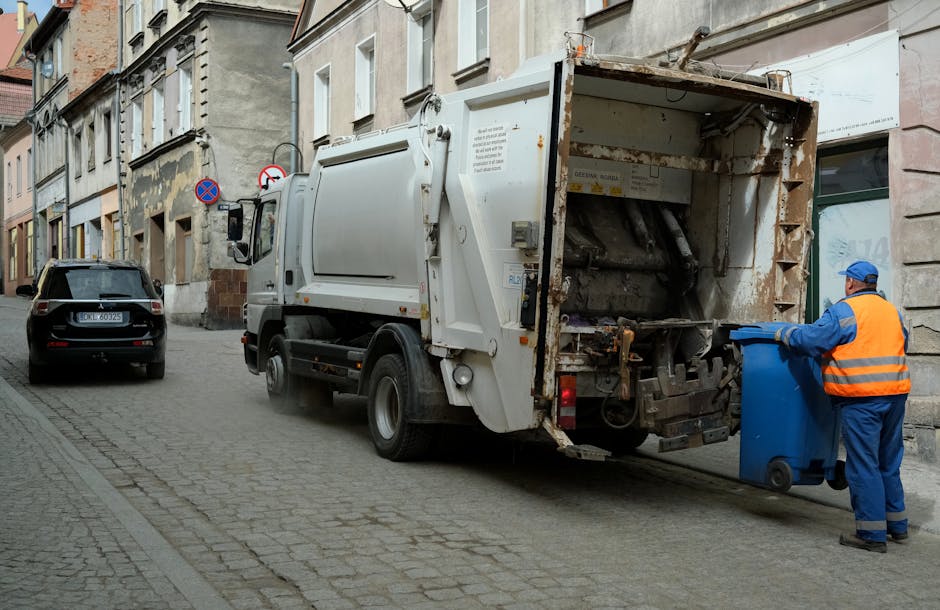


 Tipper Van - Junk Clearance and Rubbish Removal Prices in Kingston, KT1
 Luton Van - Junk Clearance and Rubbish Removal Prices in Kingston, KT1